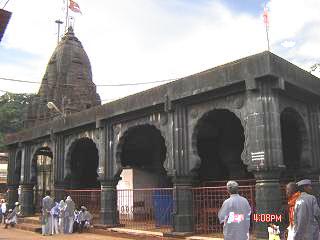
Shirdi Sai Baba Temple
The resting place of the beloved saint who declared "Sabka Malik Ek" — God is one for all.
The Katha
No one knows where he came from. One day, a young fakir appeared in the tiny village of Shirdi — barefoot, dressed in rags, with nothing to his name except a brick he placed under his head as a pillow and a fire that he kept burning eternally in a small mosque. He never identified himself as Hindu or Muslim. When asked about his past, he simply smiled and said, "Sabka Malik Ek" — God is one, the same God governs all.
The villagers called him "Sai" (a Persian term for holy man) and "Baba" (father). He lived in a dilapidated mosque he called "Dwarkamai" and slept next to a fire he called his "dhuni" which he kept burning for over 60 years. From this mosque, he dispensed ash (udi) from his fire as medicine — and accounts of miraculous healings spread across India. The blind could see. The dying recovered. The barren conceived.
What made Sai Baba truly unique was his radical message of religious unity. He lived in a mosque but was equally comfortable in a Hindu temple. He quoted the Quran and the Bhagavad Gita in the same breath. He celebrated Eid and Diwali with equal joy. His devotees included Brahmins and untouchables, Hindus and Muslims, the richest merchants and the poorest beggars. In an India torn apart by communal tension, Sai Baba's life was living proof that God belongs to no religion.
After his Mahasamadhi (conscious departing of the body) on October 15, 1918, his devotion only grew. Today, the Shirdi Sai Baba Trust manages one of the largest charitable operations in India — feeding 40,000 people daily for free, running hospitals, and funding education. Over 8 million pilgrims visit annually.
History
Sai Baba arrived in Shirdi around 1858. The temple was built over his Samadhi after his Mahasamadhi in 1918. Over 8 million pilgrims visit annually.
Festivals
Guru Purnima, Ram Navami, and Vijayadashami (the anniversary of his passing) draw enormous crowds.
Architecture
An expansive marble complex centered on the Samadhi Mandir. The Dwarkamai mosque where Baba lived is also part of the pilgrimage circuit.
Location
Gallery
How to Reach Shirdi Sai Baba Temple
📍 Get Directions
Calculate driving distance and estimated time from your current location
🚊 Nearest Transport
Nearest Airport
Chhatrapati Shivaji Airport, Mumbai
Nearest Railway Station
Mumbai CST / Pune Junction
Nearest Bus Stand
Mumbai Central Bus Depot
💡 Tip: For remote temples, hire a local taxi or auto from the nearest town. Check IRCTC for train bookings and state transport websites for bus schedules.
Community Trips
Reviews & Experiences
Sign in to share your experience at this temple
Sign In to ReviewNo reviews yet. Be the first to share your experience!